
Your Complete Checklist for Honed Concrete That Actually Works in Australian Weather

How to specify honed concrete correctly for your outdoor project
March 13, 2026
Should You Choose Concrete or Pavers for Your Australian Outdoor Space?
March 13, 2026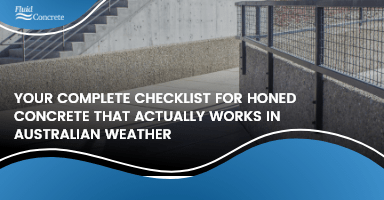
Why honed concrete stands up to Australia’s tough climates
Australia’s climate throws some serious challenges at outdoor surfaces. We’re talking scorching summer heat, wild temperature swings between day and night, and constant moisture around pool areas that can make or break any material.
Your outdoor surfaces need to handle significant thermal stress and moisture whilst keeping everyone safe and comfortable. This is especially important where people walk barefoot.
Honed concrete rises to meet these challenges with a unique set of qualities that work brilliantly in harsh Australian conditions. The surface is mechanically smoothed to create that sleek look whilst keeping the stone’s natural strength intact for long-lasting durability.
As a dense, low-maintenance finish, honed concrete naturally fights off moisture penetration and makes cleaning simple. This matters hugely when you’re dealing with rain, pool water, or garden runoff. Plus, specialised finishing techniques can boost slip resistance, making it a smart choice near water or where kids and guests spend time.
Here’s where honed concrete really shines in Australian weather extremes: its high thermal mass. This property lets the material soak up and store heat during daylight hours, then slowly release it as temperatures drop.
What does this mean for you? Honed concrete actually moderates your outdoor space temperature, staying cooler underfoot on hot days whilst limiting heat loss at night or during winter. Independent studies show that in slab-on-ground construction, concrete maintains steady subsurface temperatures, typically between 16°C and 19°C across much of Australia.
This creates a more stable and comfortable environment year-round.
Two key performance factors make honed concrete particularly appealing across Australia’s climate zones. First, its ability to act as a thermal buffer delivers lasting comfort despite temperature fluctuations, supporting the usability and enjoyment of outdoor living spaces across all seasons.
Second, the inherent toughness and simple upkeep address wear, weathering, and hygiene concerns without demanding regular sealing or complex maintenance routines. This combination of performance makes honed concrete a logical choice for patios, alfresco dining areas, and pool surrounds where climate resilience and liveability are essential.
What honed concrete is and where it excels outdoors
Honing is a mechanical process that grinds and smooths the concrete surface, creating a refined finish that looks sleek whilst keeping excellent grip underfoot. Unlike highly polished concrete, honed concrete gives you that matt to semi-gloss appearance but stays highly slip-resistant, even when wet.
This makes it particularly brilliant for outdoor use where safety around water and high-traffic areas simply can’t be compromised.
Across Australia, honed concrete is widely used in residential and commercial settings where surfaces cop constant exposure to the elements. You’ll see it in driveways, walkways, patios, and pool surrounds, as well as commercial zones that need both visual appeal and serious durability.
The honing process leaves the aggregate within the concrete visible, adding an elegant, natural character to outdoor areas without giving up any practical benefits.
The material’s popularity outdoors right across Australia comes down to its outstanding performance under harsh and demanding conditions. Honed concrete handles intense sun, heavy rain, and frequent use brilliantly, maintaining its strength and appearance for years with minimal fuss.
It resists surface wear and staining, and typically only needs routine sweeping and occasional pressure washing to stay in top condition. This combination of durability, easy upkeep, and the ability to look good whilst handling the realities of Australian weather makes honed concrete a practical and cost-effective solution for any exterior space that needs to balance form and function.
Thermal performance: comfort through Australia’s diurnal swings
Concrete delivers exceptional thermal mass, which means it can absorb substantial amounts of heat energy during the day and slowly release it as temperatures drop overnight. This property helps flatten out temperature extremes in outdoor environments, making spaces more comfortable for longer periods.
During hot Australian days, slab-on-ground honed concrete floors soak up solar energy and store that warmth deep within their mass. As night falls and air temperatures drop, the stored heat is gently released, helping to moderate overnight cooling.
This cycle reduces sharp temperature swings and lessens your reliance on artificial heating and cooling.
The effectiveness of concrete’s thermal moderation gets a boost from earth coupling when slab-on-ground construction is used. Uninsulated slabs are in direct thermal contact with the ground, drawing on the stable subsurface temperatures that typically sit between 16°C and 19°C across much of Australia.
This thermal coupling means that in winter, heat is retained from both solar gain and the ground below. In summer, the earth’s cooler temperature helps absorb excess warmth from above.
This continuous natural stabilisation of a concrete slab’s temperature leads to consistently comfortable outdoor surfaces throughout the year.
Regions with significant diurnal temperature variation, such as Western Australia, benefit even more from honed concrete’s thermal properties. Western Australia experiences some of the country’s highest day-to-night temperature swings.
Here, slab-on-ground honed concrete floors have earned a local reputation for their ability to smooth out these abrupt changes. This leads to surfaces that remain comfortable and usable from morning through evening.
This makes honed concrete a particularly effective solution for patios, alfresco areas, and pool surrounds in climates characterised by both intense heat and chilly nights. It delivers tangible comfort with minimal energy input or maintenance.
Design strategies that enhance performance in extreme seasons
Passive solar design becomes your best mate when you want to boost comfort and performance of honed concrete surfaces through challenging seasonal extremes. Position the majority of large windows facing north, allowing maximum winter sunlight to penetrate and warm indoor or semi-enclosed outdoor concrete surfaces.
Effective use of controllable external shading is absolutely key here. Think eaves or retractable blinds that permit sun access to the concrete during winter, but can be adjusted to block high summer sun and limit overheating.
Natural ventilation becomes critical, especially as temperatures climb. Cross-ventilation through carefully positioned windows and doors should be incorporated to promote breezes and exhaust excess heat.
Where possible, mechanical ventilation may be added to further support airflow during still evenings or hot spells.
To maximise thermal gain in winter, expose the honed concrete directly to sunlight by opening blinds or removing rugs from areas adjacent to north-facing windows. This boosts the thermal mass’s capacity to absorb free solar energy during the day and release stored warmth in the evening.
In summer, the strategy reverses: implement shading and keep blinds or shutters closed to limit sunlight striking the floor, thereby minimising unwanted heat gains.
Night purging further enhances summer comfort in insulated or well-shaded spaces. By opening windows during the evening, homeowners can purge built-up heat from the concrete and the room, inviting cooler air in and supporting passive cooling.
If the space wasn’t or cannot be fully optimised for passive design, there are still considerable benefits to be gained. Removing insulated floor coverings such as carpets or rugs from areas where north sunlight enters will increase the honed concrete’s exposure to useful solar gain.
Installing double glazing to north-facing windows improves heat retention in cooler months and reduces unwanted heat loss, making full use of the concrete’s thermal mass potential.
These strategies, adapted for the Australian climate, help ensure concrete surfaces consistently contribute to comfortable, energy-efficient outdoor living through both the hottest summers and coolest winters.
Durability under exposure: upkeep that resists Australia’s elements
Regular maintenance forms the backbone of keeping honed concrete performing brilliantly in Australian conditions. Weekly sweeping removes leaves, dust, and gravel that would otherwise cause scratches and stains, particularly after those windy days or during autumn leaf fall.
Most marks disappear with nothing more than a pH-neutral cleaner mixed with warm water. Harsh chemicals will gradually eat away at the surface and shorten its lifespan, so stick with gentle products.
Outdoor areas like driveways and walkways that develop ground-in dirt or show weather damage benefit from occasional pressure washing. This restores the surface without harming that smooth honed finish.
Focus on high-traffic spots, but always set your equipment to appropriate pressures to prevent surface etching.
Quick action on spills prevents permanent staining. Oil and grease need immediate attention: blot the spill straight away, then use mild detergent and water to break down what’s left.
Never scrub with abrasive pads or reach for aggressive solvents, as these will compromise both the look and structure of your concrete.
Protective sealing plays a crucial role in long-term performance. Most honed concrete surfaces need resealing every three to five years, but this depends on how much traffic, sunlight, and chemicals like pool chlorine they face.
If your sealant looks faded or worn, early reapplication helps defend against weathering and staining whilst maintaining both strength and visual appeal.
For cracks, chips, or any damage, get repairs handled by concrete professionals promptly. Expert repairs prevent small issues from becoming big problems, preserving both safety and extending your surface’s lifespan.
Consistent upkeep, from regular sweeping and gentle washing through to periodic sealing and timely repairs, ensures these outdoor surfaces handle Australia’s climate challenges for years to come.
Actionable checklist for choosing and managing honed concrete in Australian climates
When choosing honed concrete for Australian outdoor settings, focus on areas where both durability and reliable slip resistance are crucial. This includes driveways, walkways, and pool surrounds where the surface must cope with heavy foot traffic, temperature swings, and regular water exposure.
Honed concrete is specifically engineered to provide secure grip underfoot whilst maintaining visual appeal, keeping these spaces safe even when wet or littered with debris.
For optimal thermal performance and year-round comfort, choose slab-on-ground construction. This method boosts earth coupling and lets the slab work as effective thermal mass, absorbing heat during daylight hours and releasing it gradually as temperatures cool.
This helps flatten daily temperature extremes. Across most of Australia, slab-on-ground honed concrete maintains steady subsurface temperatures of approximately 16°C to 19°C, making alfresco and entertaining areas much more usable throughout all seasons.
Integrate passive design principles to fully leverage honed concrete’s thermal benefits. Where possible, design layouts to include north-facing glazing, controllable external shading, and good cross-ventilation.
North-facing windows maximise free solar gain in winter, potentially adding 4–6°C of warmth to adjacent areas. Adjustable shading, such as eaves or blinds, should shield the surface during summer to prevent overheating.
Encourage cross-flow breezes through strategic openings and, in cooler months, use night purging by opening windows in the evening to shed excess heat and support passive cooling.
Preserve the look and performance of honed concrete with a consistent maintenance routine. Conduct regular sweeping to remove leaves, dust, and debris before they stain or create slippery conditions.
Wash surfaces periodically with a pH-neutral cleaner and water. Avoid harsh chemicals that can degrade the finish and reduce slip resistance.
Outdoor honed concrete benefits from occasional pressure washing to refresh its appearance, especially in high-traffic areas. Expect to reseal every three to five years depending on usage and exposure, earlier if you notice significant surface wear.
If any cracks, chips, or visible degradation of the sealant surface appear, consult professionals for repairs and resealing. Timely intervention prevents minor issues becoming safety risks or causing long-term deterioration.
This professional attention also ensures the surface retains its essential slip resistance and remains visually appealing for years. By following this checklist, honed concrete can deliver lasting durability, comfort, and safety suited to the demands of Australian outdoor living.